

Game info
Real-time strategy, Army strategy
Explore Stick War: Legacy army strategy, gold mining, unit roles, direct control and practical attack plans for campaigns and survival battles.
Stick War: Legacy: Build an Economy, Then Command the Battle
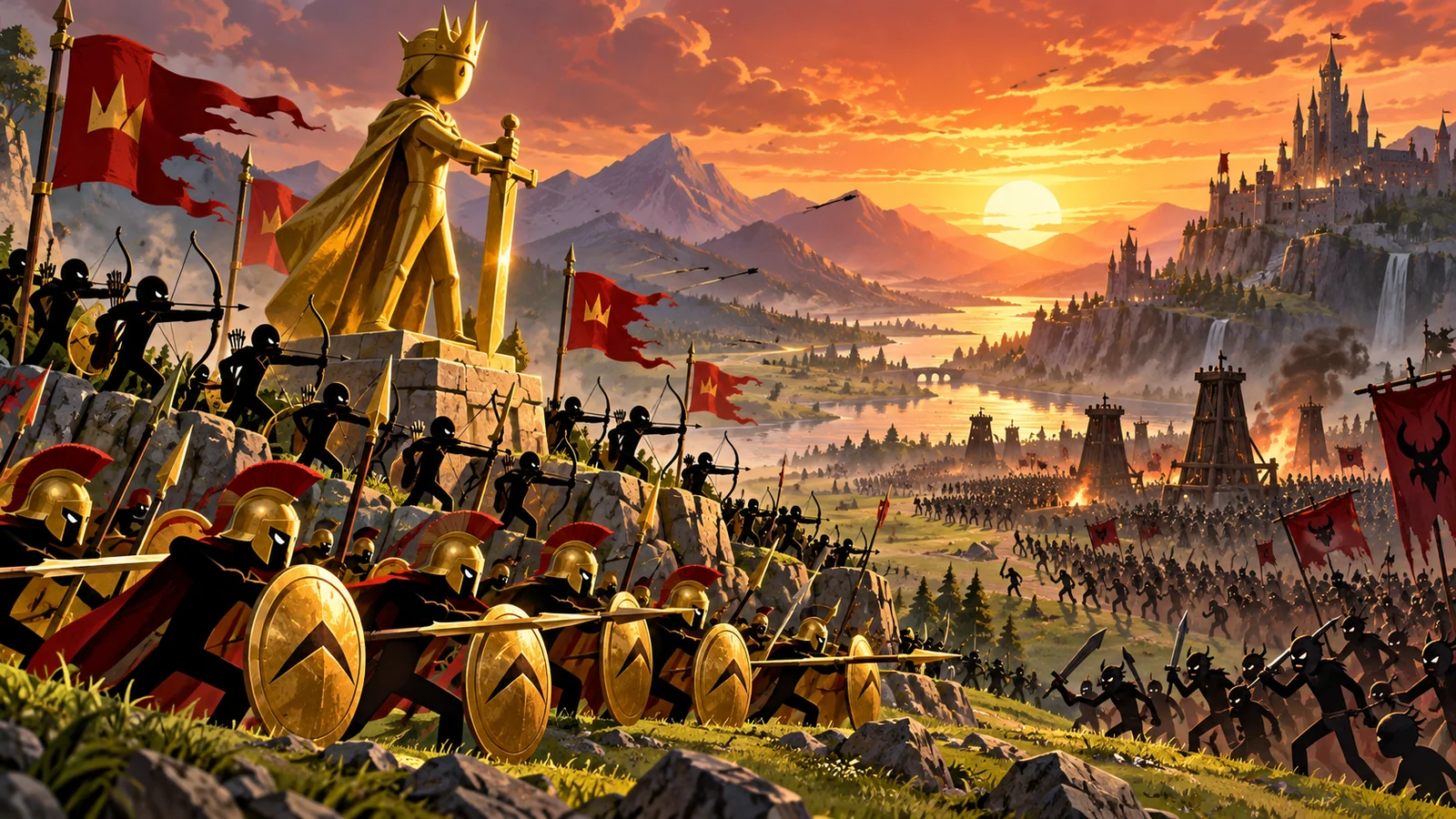
Stick War: Legacy is Max Games' strategy game about mining gold, recruiting a specialised army and destroying the opposing statue while protecting your own. Miners fund the battle, melee units create a frontline and ranged or heavier support converts that space into damage. You can command the force broadly or take direct control of an individual unit when a local action needs extra attention.
The interesting decision is rarely just which unit looks strongest. An expensive fighter arriving too late can be less useful than affordable support that keeps the frontline alive now. Likewise, an early rush can fail if the opponent survives and your miners cannot fund replacements. The official Stick War homepage introduces Legacy and the wider series. Below, the focus is the original Legacy game: economy, army composition, direct control, campaign pressure and the decisions that turn gold into a coordinated attack.
Gameplay Overview
A Stick War match links three areas of attention: the economy near your base, the frontline where units meet and the enemy statue you ultimately need to destroy. Losing track of any one can waste the advantage gained in the others. Gold without recruitment does not defend you; a large force without replacements can run out of strength during an attack.
Begin by identifying how your current army earns gold and receives orders. Watch the travel time from recruitment to the fight. If a replacement has to cross a long battlefield, a frontline that looks healthy now may still need support sooner than expected. This is why a good attack starts before the command to advance: it begins with enough income, appropriate unit roles and a plan for what happens when the first soldiers fall.

How to Play: Start with an Economy You Can Defend
Recruit workers early enough to create a continuing source of gold, then build a defence that protects that investment. Sending every resource into miners can leave the base open; sending everything into troops can make the first battle your only serious chance. Balance the opening around how much pressure the enemy is applying.
Imagine you can buy one more worker or reinforce a thin frontline. If the current defenders can hold while the worker starts earning, the economy purchase may strengthen several later decisions. If those defenders are about to collapse, the same purchase can be too slow to matter. Judge the decision by the time it needs to pay off. The official Legacy Android listing describes mining, recruitment and army control as the core of Stick War: Legacy.
Controls: Army Orders and Individual Units
Use the recruitment controls to purchase units, then issue army orders to defend, advance or withdraw. Direct control lets you operate one unit while the rest of the force continues its assigned job. Learn the movement and attack prompts with a low-pressure unit before relying on them during a crowded engagement.
These two layers solve different problems. An army order changes where the whole force is trying to fight; direct control improves one local position or action. If a frontline is collapsing because reinforcements are separated, moving one fighter skilfully may not fix the formation. If the army is stable but one enemy threatens valuable support, controlling an appropriate unit can help address that threat. Return attention to recruitment and miners after the manoeuvre. A locally successful attack is less valuable when it costs you the income and production needed for the next clash.
Key Features of Stick War: Legacy
The official app lists Classic Campaign, Missions, Tournament and Endless Deads. These give Stick War: Legacy different ways to test army planning: a campaign introduces situations over a map, individual missions can change the objective, tournament opponents offer another contest and survival extends the pressure over repeated nights.
Choose a mode according to the decision you want to improve. A player practising the opening economy needs a different session from someone learning to protect ranged support during a long defence. The official Legacy iOS listing is a useful reference for the game's features and distribution. In Campaign, focus on the enemy force and the economy needed to defeat it. In Endless Deads, preserving a formation that survives repeated pressure becomes especially important.
Understand Unit Roles
Think of units as jobs within a formation. Miners support future purchases. Frontline fighters occupy the space where opponents make contact. Ranged attackers need room and protection to keep contributing. More expensive support is only valuable if the rest of the army gives it time to work.
The familiar Swordwrath, Archidon, Spearton, Magikill and Giant names in the official game help organise those roles, but they do not remove the need to read the current fight. If your ranged units are repeatedly reached by enemies, buying still more ranged damage may repeat the same failure. If the frontline survives but the enemy never loses strength, ask whether you need more damage or a better attack window. Recruit to solve the role that is missing, not simply to repeat the last purchase.
Build a Frontline Your Support Can Use
A useful frontline creates time and space for the units behind it. Watch where contact occurs and whether your support is able to participate. If the frontline runs far ahead, the first soldiers may take the full enemy force before the rest arrive. If everything stays too far back, you may surrender room that your defenders could safely hold.
Try to start an engagement with the main roles arriving together. After the lines meet, check whether the support is firing, whether wounded units are being replaced and whether the enemy is slipping past to a vulnerable target. A compact, supported force can be more effective than a larger army stretched across the map. The useful measurement is not the recruitment total alone; it is how much of that force is contributing during the decisive few seconds.
Pro Tips: Make Attacks Deliberate
Before ordering an attack, check three things: the force you have now, the force still travelling and the income that will replace losses. A push is more convincing when those parts support each other. Attacking merely because the command is available can turn a small advantage into an unsupported march.
Consider an opponent whose first wave has just been defeated near your base. You may have a window to advance, but the surviving army could be badly damaged. Compare a short push for space with a complete assault on the statue. Waiting for a necessary replacement may preserve the opportunity; waiting for an unnecessarily perfect army may give the opponent time to rebuild. Deliberate attacking means recognising that window and deciding how much risk the current force can actually carry.
Use Retreat as a Decision, Not a Defeat
Retreat can preserve units, shorten the distance to reinforcements and move a fight towards a position you can defend. It is useful when it changes those conditions. A retreat made after the frontline has already disappeared may save little; a retreat made too early can hand away pressure your army was capable of maintaining.
Watch what your order accomplishes. If surviving troops return closer to new recruits, you may be able to form a stronger second line. If the enemy continues chasing, ask whether the new position gives your ranged units or defenders a better engagement. Do not immediately reverse the order just because the opponent moves forward. Let the army reach the position you intended, then reassess the fight with its roles and support reunited.
Modes: Choose the Skill You Want to Practise
Campaign play is useful for learning how a familiar army handles a changing opponent. Missions are useful when a special condition forces a different recruitment or timing choice. Tournament and Endless Deads can test how you manage pressure over a longer sequence. Their value is in the particular problem they present, not in a promise that one formation wins everything.
Give a practice session one measurable aim. You could keep the economy active throughout a defence, stop losing ranged support first, or launch an attack only after reinforcements are close enough to matter. Judge the result by that aim as well as victory. A narrow loss that reveals why the frontline failed can teach more than repeating a comfortable mission without making a deliberate change.
Economy under Pressure
An economy under attack needs protection, not just more workers. If mining is repeatedly interrupted, calculate the cost of that lost time as well as the cost of the next soldier. A small defensive investment can protect several later purchases; an ambitious army purchase can become unaffordable if workers never get a stable chance to earn.
Watch for the moment when the enemy's pressure changes. A force holding comfortably against one wave may be inadequate against the next composition. Plan an affordable response before that change reaches your base. Conversely, if a defence is now secure, use the breathing room to rebuild income rather than spending every new piece of gold on the same defensive role. Strong economy play moves between survival and growth instead of treating them as unrelated phases.
Skins, Difficulty and Optional Purchases
Legacy includes equipment and skins with individual perks, so a costume should not automatically be treated as a purely visual change. Read the current item description and compare its effect with the units you actually use. A benefit attached to a neglected role will not repair a formation that fails for another reason.
Difficulty also changes what a successful attempt asks of you. Learn how a mission's first engagement unfolds before spending optional resources to force a result. For purchase, restore or installation questions, use the official app's support route or the Max Games website, not an offer for free premium currency from an unrelated page. A sound recruitment and positioning decision remains worth practising whether or not a particular item is equipped.
Advanced Tips for Direct Control
Direct control is most useful when you can name the local improvement you want: a better position, a well-timed attack, protection for a vulnerable unit or a useful intervention at the frontline. Enter it with that purpose, complete the action, then return attention to the wider battle before recruitment and income drift out of view.
Avoid chasing a single weakened enemy across the map while the rest of the force fights without support. The local victory can cost more elsewhere than it gains. Practise a short control sequence during an easier encounter: select the unit, use its taught action, check its position and inspect the rest of the army again. A reliable short intervention is a stronger foundation than staying in direct control simply because it feels more active.
A Practical Review after a Loss
After a defeat, find the first important loss of function rather than only the last moment at the statue. Perhaps miners were interrupted, the frontline separated from its support, or an attack began while replacements were still far away. Those are different problems and need different changes.
Review one stretch of the battle in order: what you bought, when it arrived and what it was expected to do. If the purchase arrived after the need had already passed, timing may matter more than the unit choice. If it arrived on time but could not perform its role, examine protection and positioning. This turns a replay into a specific plan for the next opening instead of a vague instruction to recruit more or attack harder.
Similar Games and Which One to Choose
The original Stick War and its sequels share the series' interest in gold, formations and enemy statues, while Stick War: Legacy develops that formula through its mobile campaigns and modes. Stick War: Saga is the separate series entry promoted for real-time multiplayer. Those are useful distinctions when choosing between a solo campaign and direct competition.
The related army strategy games on this website focus on side-view battles, recruitment and base pressure. Age of War and the other army alternatives change the unit roster or progression, so compare how they earn resources and issue orders before copying a Legacy opening. Choose a game for the strategic decision you enjoy most: supporting a frontline, timing recruitment, controlling a unit or deciding when an attack has enough strength to finish.
Browser games in this collection
- Stick War Saga — This catalogue-listed Stick War Saga is a separate browser strategy game about mining resources, recruiting a stickman army and pushing into enemy territory. The title should not be confused with a verified port of Max Games' native Saga.
- Age of War — Age of War is a side-on army battle in which troops from different ages march against the opposing side. Sending units and managing the transition between eras make it a close structural comparison to Stick War's recruitment and base objective, even though its setting and roster are different.
- Noob vs Pro: Stick War — Noob vs Pro: Stick War uses miners, recruited fighters and opposing statues in a side-on battle. Its portal description explains bringing workers to safety during raids and spending battle rewards on upgrades.
- Clash of Warriors: Age of War — Clash of Warriors: Age of War asks you to summon fighters from regenerating supplies while defending a base and breaking the enemy's. Battle coins support upgrades and new troop choices.
- Warrior Clash — Warrior Clash centres on miners, gold, recruited warriors and assaults on an enemy citadel. Workers can be called back during raids, while rewards improve the army between battles.
- Army of Ages — Army of Ages puts a human force against an alien hive in a side-on technology battle. Workers gather water that becomes gold, buildings produce combat units, and new ages unlock different equipment.
History and Updates
Max Games presents Stick War: Legacy as the mobile remaster of the classic Stick War game. Its official series pages identify the releases and their different strategic emphasis. Legacy develops the single-player army-commanding formula through its campaigns, missions, equipment and survival activities.
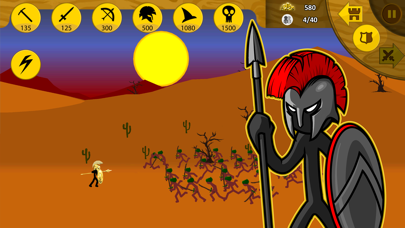
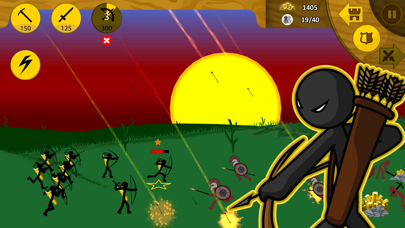
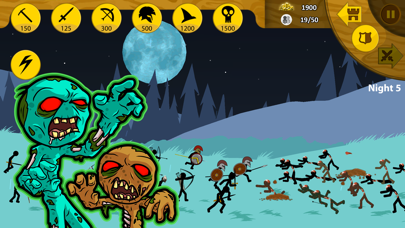
The trailer and screenshots below show Legacy's presentation and army scale. Watch how units arrive together, where the frontline forms and whether ranged support has time to contribute. These relationships explain more about a successful battle than the apparent size of one unit. A force that earns steadily and replaces losses can recover from a poor trade; a force whose miners are interrupted may struggle after an impressive early push. Use the product's release notes for changing mission or equipment details, while keeping the battlefield analysis grounded in economy, positioning and timing.
Choose One Better Decision for the Next Battle
Start the next Stick War: Legacy battle with a simple question: what must the first purchases protect or achieve? Build income that can support the plan, recruit the roles the fight needs and give the army a clear moment to advance. The battle becomes easier to understand when each order connects to an economy and a position on the field.
Choose one improvement for the next attempt. You might protect miners earlier, wait for ranged support before attacking or retreat before the frontline becomes impossible to replace. Keep the other decisions steady enough to see whether that change helps. After the battle, name the role that succeeded and the role that failed first. This gives the next recruitment choice a purpose and makes progress more concrete than simply buying a bigger army and hoping the result changes.
Frequently asked questions
What is Stick War: Legacy?
It is Max Games’ army-commanding strategy game: mine gold, recruit specialised units, protect your statue and defeat the opposing force. Army orders and individual-unit control provide two layers of command.
What is the objective in Stick War: Legacy?
Build a functioning economy, defend your statue and destroy the enemy statue. Particular missions and modes can add more specific conditions.
Why are miners important in Stick War: Legacy?
They fund later recruitment. Protect their working time: even a strong opening attack can lose momentum if you cannot replace casualties or reinforce the frontline.
Which modes does Stick War: Legacy include?
The official product listing names Classic Campaign, Missions, Tournament and Endless Deads. Choose a mode according to whether you want campaign progression, a specific challenge or longer survival pressure.
What should I check before attacking in Stick War: Legacy?
Check that the frontline and support can arrive together, that replacements are being funded and that the attack has a clear purpose. A force split along the road can lose strength before the main fight begins.
Are Legacy skins only cosmetic?
The publisher describes equipment and skins with individual perks. Read the current item description and consider which unit role benefits before making a choice.
Can I play Stick War: Legacy offline?
The official Android listing advertises offline support for the installed game. Installation and optional online services can still require a connection.
What should a Stick War: Legacy beginner practise first?
Keep the economy active while protecting it, then learn how a supported frontline gives ranged and heavier units time to contribute. Review which role fails first in a lost battle.

Good game? Tell us.0
Share a tip, celebrate a high score, or tell us what you think. Keep it friendly.